
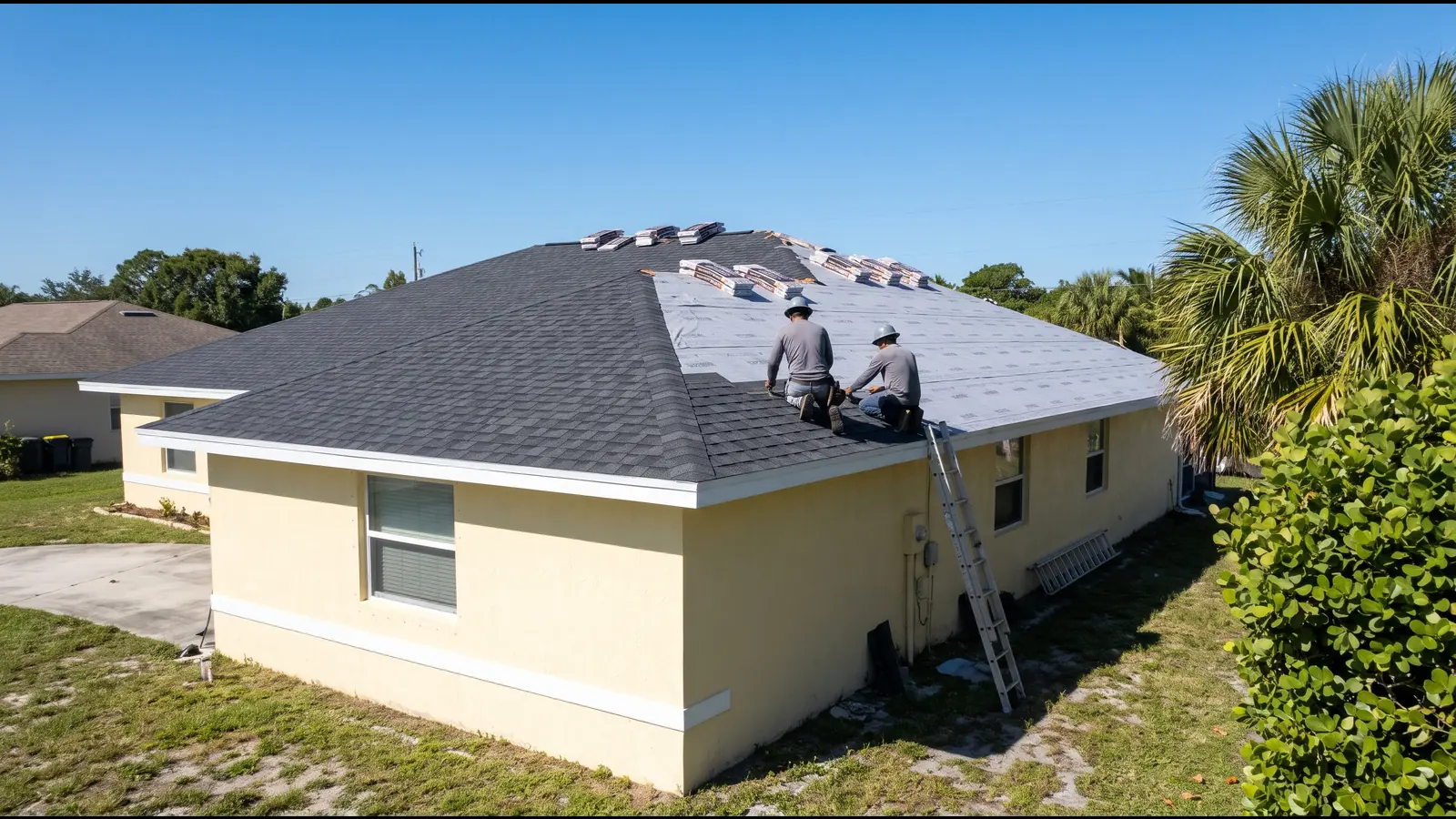
Wind Mitigation and 4-Point Inspection Items on the Roof

Roof deck attachment
The inspector goes into the attic and records the weakest deck fastening found. Classes for plywood or OSB at least 7/16 inch thick, trusses no more than 24 inches apart:
- A: staples or 6d nails, 6 inches on the edges and 12 inches in the field
- B: 8d common nails, no more than 12 inches apart in the field
- C: 8d common nails, no more than 6 inches apart in the field
- D: a reinforced concrete roof deck
The form also has an answer for "no attic access." Moving up a class happens with the covering off (deck renailing).

Roof-to-wall attachment
Graded again by the weakest connection, from lowest to highest: toenails, clips that don't wrap over the truss, single wraps and double wraps. A connector only counts if it has at least three nails into the truss, sits within the form's gap limits and shows no severe corrosion. Hip and valley jacks within 5 feet of a corner are left out of the grade. Because one weak truss sets the answer, retrofits aim at every truss.

Roof covering and secondary water resistance
For the covering, the form asks for the permit application date or the product approval number and the year installed. The top answer goes to coverings with a product approval current when installed, a permit application on or after March 1, 2002, or an original roof on a house built in 2004 or later. On secondary water resistance, taped deck seams, fully adhered underlayment, a double layer of underlayment or attic spray foam count. Standard underlayment and hot-mopped felt don't.

The roof section of a 4-point inspection
A 4-point inspection looks at the electrical, plumbing, heating and cooling systems and the roof. Citizens asks for one on homes more than 20 years old. The roof section records the covering, its age, remaining useful life and last permit date, with a photo of each slope. That roof section can take the place of Citizens' separate Roof Inspection Form. Roof certifications under the roof-age rule are on the roof inspection page.
Why Pompano Beach homeowners call Pompano Beach Roofers
- Calling or sending the form costs you nothing
- Your request goes to one roofer, not a list of bidders
- Ask for tear-off, deck work and the permit on one itemized quote
- Get the roofer's CC or RC license number and check it yourself
Who Can Sign a Wind Mitigation Form in Florida
The form's signature block says mitigation inspections "must be certified by a qualified inspector" and points to Florida Statute 627.711(2) for the list:
Home inspector
licensed in Florida who has completed at least 3 hours of approved hurricane mitigation training and a proficiency examBuilding code inspector
certified by the stateGeneral, building or residential contractor
licensed under Statute 489.111Professional engineer
or professional architectAnyone else the insurer recognizes
as qualified
Roofing contractors aren't named. The signer must inspect the house personally, except that engineers and 489.111 contractors may send a direct employee. Knowingly handing in a false form to get a discount is a first-degree misdemeanor. The discounts come from Florida Statute 627.0629, which makes insurers' rate filings credit roof strength, roof covering performance and roof-to-wall strength.
Wind Mitigation Inspection and Roof Work, in Order
STEP 01
Inspect first
A current form shows the weakest answers, so the roof work goes where it changes a grade.
STEP 02
Do the roof work with photos
The form needs a photo or document for each feature it credits, so ask the roofer to photograph straps, nailing and taped seams before they're covered.
STEP 03
Re-inspect
A fresh form records the upgrade for your insurance agent.
See hurricane roof upgrades for the retrofits that move these answers up.