
Storm Damage Roof Repair by Roof Covering

Wind-lifted and missing shingles
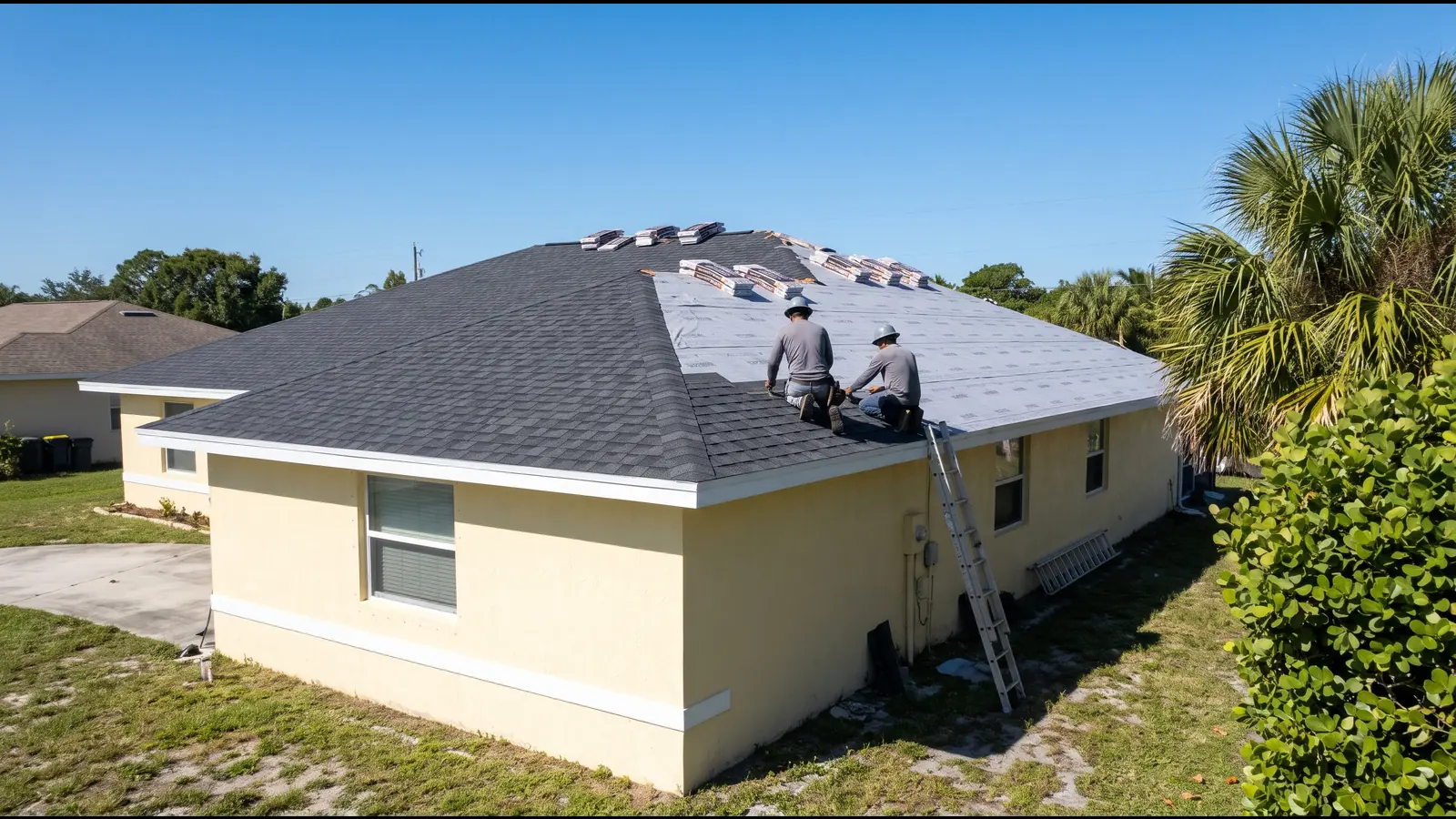
FEMA's review after Hurricane Michael reported widespread shingle failures and linked them to two causes: shingles that never sealed to the course below, and nails driven in the wrong place on the shingle. Its guidance singles out eaves, rakes, hips and ridges for extra care. A good repair checks the sealing and nailing on the shingles around the gap, too. Replacement shingles should carry a wind class that matches the site. FEMA's table calls for ASTM D7158 Class H where design wind speed is above 155 mph, and Broward's is higher than that (see the design wind speed). FEMA advises checking the package label for the class.

Displaced and broken tile
Wind leaves tile roofs with slipped tiles, cracked tiles and loose ridge caps. Florida's existing-building code lets a repair reuse salvaged clay or concrete tile, provided it matches the roof in material and profile. Cracked or broken pieces can't go back on. Ask the roofer to lift a few tiles near the damage and look at the underlayment underneath before quoting.

Peeled metal panels, ridge and edge trim
Metal roofs held up better than other coverings on code-built homes in FEMA's Hurricane Michael review, but some metal roofs were still damaged. In the HVHZ the code sets the minimums for replacement trim:
- Metal accessories: at least 26 gauge G-90 galvanized or stainless steel, or 0.025 inch aluminum
- Drip edge and gravel stop laps: 4 inches minimum
- Deck flange fastening: 12 gauge ring-shank nails at 4 inches on center

Flat roof membrane blow-offs
On a low-slope roof, wind that gets under loose edge metal can lift the membrane behind it. The HVHZ code requires roof flashings and terminations to be designed for its wind loads and built to the RAS 111 standard, so a repair that only re-glues the membrane and reuses bent edge metal misses the cause. See flat roof repair for membrane patching by system.
Why Pompano Beach homeowners call Pompano Beach Roofers
- Calling or sending the form costs you nothing
- Your request goes to one roofer, not a list of bidders
- Ask for tear-off, deck work and the permit on one itemized quote
- Get the roofer's CC or RC license number and check it yourself
Storm History and Roof Damage in Pompano Beach
Wilma came ashore as a Category 3 on October 24, 2005, with 83 mph sustained wind recorded in the city. The National Weather Service found structural damage heaviest in Broward and Palm Beach counties, with roof damage noted there. Irma, in 2017, brought 69 mph sustained wind at the city's ASOS weather station, and gusts across most of Broward fell in the 80 to 100 mph range. It was the first major hurricane to make landfall in South Florida since Wilma. The peak gusts for both storms are on the homepage.
Rules That Apply to a Storm Repair
When the cancel window closes
Under Florida Statute 489.147, the "official start date" that ends the window is the day permanent materials start going on, a permit is issued, or a code-compliant temporary repair is made to the roof. A tarp put on by the same contractor can count, so read the contract before the crew climbs up.Itemized estimate
The same statute bars contractors from offering gifts or cash in exchange for inspecting your roof and calls for an itemized, detailed estimate of services and materials. Ask for one before you sign; violations carry fines of up to $10,000 each.Permit
Every roof repair in Broward needs a permit pulled by a licensed contractor (how repair permits work).The 25% rule
If repairs pass a quarter of an older roof section within 12 months, the whole section may have to be redone (how the 25% rule works).License check
Look up the contractor's license before work starts, as explained on the homepage.
See emergency roof repair for tarping and other stopgaps before the repair is booked.