
Condo Roof Replacement by Building and Roof Type

Mid- and High-Rise Condo Flat Roofs
Condo towers on the barrier island and along the Intracoastal have flat roofs, and the deck under them drives the HVHZ testing. A re-roof over lightweight insulating concrete, gypsum or cementitious wood fiber needs a TAS 105 field test of fastener holding power. If the fasteners reach less than 80% of the product approval's value, a structural engineer writes the attachment spec before the permit is issued. Where the new system bonds to bare structural concrete, the deck has to be dry before the primer goes down. Membrane choices are on flat roof replacement, and the rules for rooftop units and drains on commercial roofing.

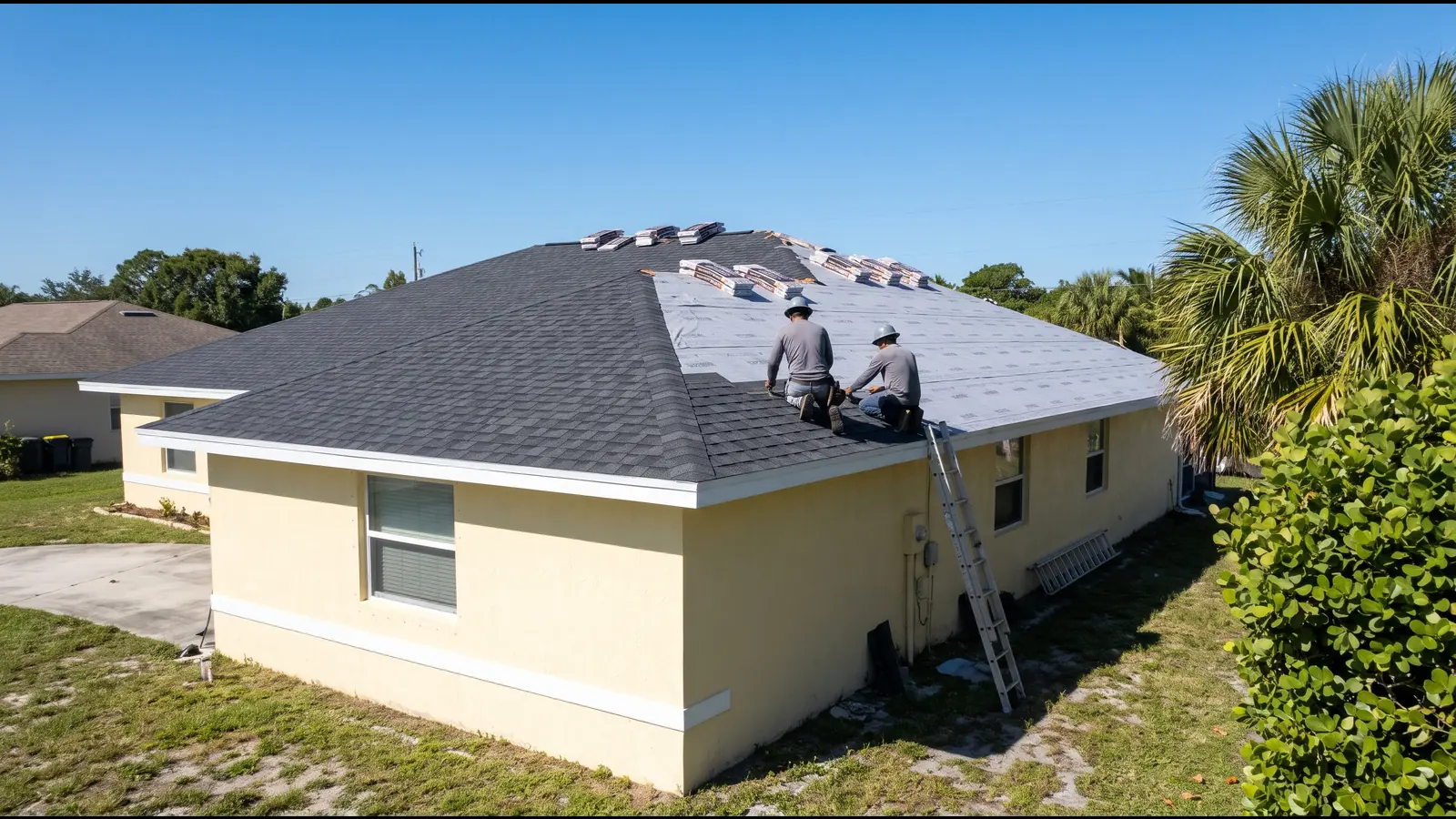
Low-Rise Garden Condos with Tile Roofs
Two- and three-story garden buildings usually have a pitched roof in concrete tile or shingle. The building height decides which condo rules apply. At three habitable stories the structural integrity reserve study applies and the roof is its first item; under three stories it doesn't, though a roof replacement reserve is still a required budget line. Tile can't go over an existing roof in the HVHZ, so these jobs are tear-offs (see roof replacement and tile roofing).

Townhome and Villa HOAs with Shared Roofs
The Census counts 3,397 single-family attached homes in Pompano Beach, and many sit in rows under one continuous roof. Who pays depends on the documents. In a condominium the association maintains the common elements, and the declaration can hand limited common elements to the owners who use them. Townhome communities set up as HOAs follow their own declaration. Either way, a row roof replaced one unit at a time can trip the 25% rule (see roof repair), so re-roofing the whole building at once is the cleaner plan.

Phased Replacement and Reserve Planning
Phasing works best by building, not by slices of one roof, since each building's roof is its own section under the 25% rule. Reserve money is the usual funding. Florida requires a roof replacement reserve account in every condo budget, regardless of cost, and an association that needs a structural integrity reserve study can't vote to spend those reserves on anything else. Associations that existed by July 1, 2022 must finish that study by December 31, 2026 at the latest, so many boards will have a roof number in hand before they call for bids.
Why Pompano Beach homeowners call Pompano Beach Roofers
- Calling or sending the form costs you nothing
- Your request goes to one roofer, not a list of bidders
- Ask for tear-off, deck work and the permit on one itemized quote
- Get the roofer's CC or RC license number and check it yourself
How a Condo Board Runs a Roof Replacement
STEP 01
Start from the reserve study
The study's remaining life and replacement cost for the roof give the board its budget and timing. It must be performed or verified by a licensed engineer, a licensed architect or a certified reserve specialist.
STEP 02
Write one scope for every bidder
Give each contractor the same roof areas, system, deck work and drain details, so the prices line up.
STEP 03
Collect competitive bids
A roof contract above 5% of the total annual budget, reserves included, needs competitive bids. The board may pick a bid that isn't the lowest.
STEP 04
Permit, deposit and resident notice
The roofer files the HVHZ permit (the steps are on roof replacement), and the deposit limits on the homepage apply. Tell residents which wing is open, where the crane or hoist stands and where parking closes.
See commercial roofing for the drain and rooftop-unit rules that also apply to condo towers.